

Key Points:
- Social skills training in NJ helps children with autism practice real-life communication in structured groups at Pops ABA.
- Our social skills group uses ABA strategies to improve peer interaction, where children build confidence, communication, and friendships that extend beyond sessions.
Have you ever wondered why your child finds it harder to connect with peers, even when they want to make friends?
For many parents, this question comes up during everyday moments like playdates, school drop-offs, or birthday parties. The good news is that with the right support, such as Pops ABA social group, children can build meaningful social skills in a way that feels safe, structured, and encouraging.
Why Social Interaction Can Be Challenging for Autistic Children
Research shows that for some on the autism spectrum, understanding social situations is complex, and many children with autism experience specific challenges that make peer interaction harder. These can include:
Difficulty interpreting social cues: Facial expressions, tone of voice, and humor may not always be easy to understand.
Theory of mind differences: Understanding that others have different thoughts and perspectives can be challenging.
Communication differences: Starting conversations, taking turns, or keeping a dialogue going may take extra practice.
Sensory overload: Noisy or busy environments like classrooms or playgrounds can feel overwhelming.
Literal interpretation of language: Idioms or sarcasm may be confusing when taken at face value.
Social anxiety or withdrawal: Past experiences or uncertainty can sometimes lead children to avoid social situations.
Focused interests: Some children prefer engaging deeply in specific interests rather than social play.
It is important to remember that many children with autism do want friendships. They often simply need structured support to build the skills needed for connection.
How Autism Social Group NJ Programs Build Real-World Skills
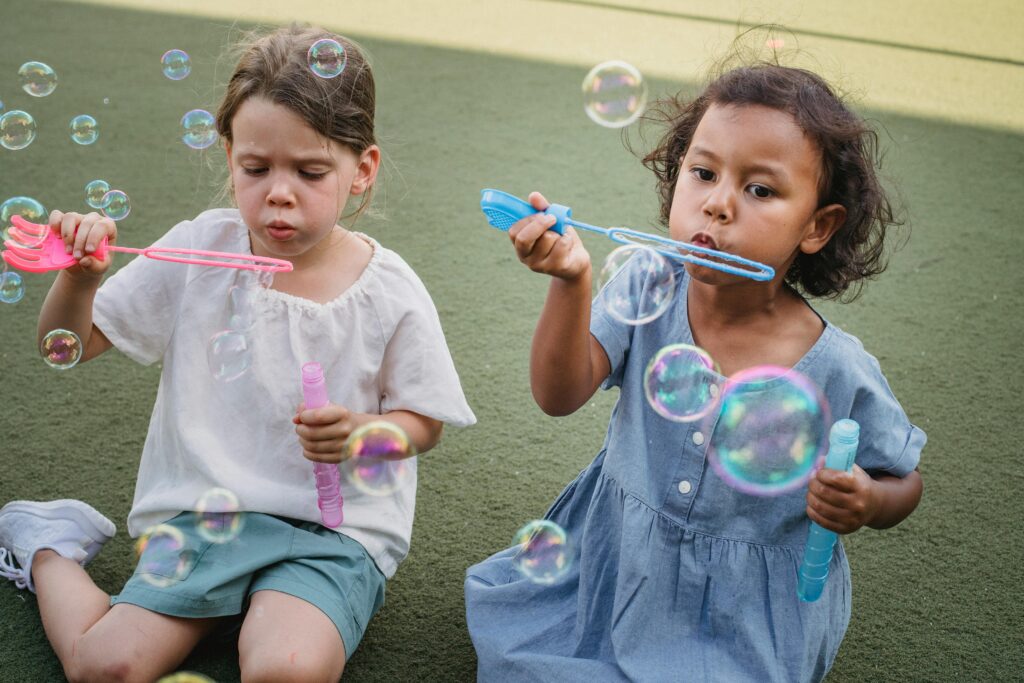
In our autism social group NJ sessions, children do not just learn theory. They practice real-life interactions in a supportive environment that encourages growth.
Parents often notice improvements not only in sessions but also at home, school, and in community settings.
Why Families Choose Our Social Skills Programs
Therapist-led structure: Every session is guided by trained professionals who balance learning with fun and engagement.
Real-world application: Skills learned in group settings carry over into everyday life, like classrooms, playdates, and family events.
Peer interaction autism New Jersey support: Children connect with peers who share similar experiences, helping reduce isolation and build understanding friendships.
Family involvement: Parents receive strategies to reinforce progress at home and celebrate milestones together.
Social Skills in Practice: Common ABA Techniques and Real Examples
Social skills are not just taught through instruction. They are practiced, repeated, and strengthened through structured ABA-based strategies that help children build confidence in real situations.
Here are some of the most effective techniques used in our social skills training NJ program:
Role-Playing and Behavioral Skills Training (BST)
A therapist may act out everyday situations such as ordering food at a restaurant or joining a group game. The child then practices the same interaction in a safe and supportive setting. This helps reduce anxiety and builds familiarity with real-life situations.
Video Modeling
Children watch videos of themselves or others demonstrating a skill, such as sharing a toy or greeting a peer. After watching, they practice the same behavior. This visual learning approach helps children better understand what successful social interaction looks like.
Social Stories
Social stories are short, personalized narratives that explain what to expect in specific situations. For example, a story might walk a child through what happens when joining a playground game and how to respond appropriately. This helps reduce uncertainty and increase confidence.
Structured Peer Interaction
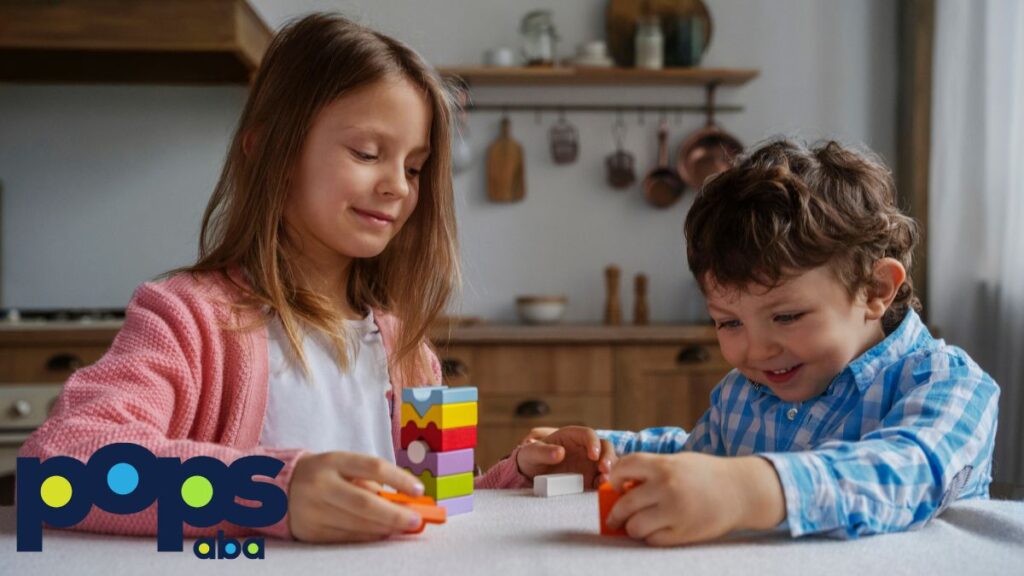
Therapists guide children through structured group activities like building with blocks or playing simple games. These moments are used to teach turn-taking, sharing, and cooperation while giving immediate positive feedback when the child demonstrates the skill.
Priming
Before entering a social situation such as a group class, therapists review expectations with the child. They may practice key phrases or behaviors ahead of time. This preparation helps reduce anxiety and increases the chance of successful participation.
Task Analysis
Complex social skills are broken down into smaller, manageable steps. For example, having a conversation may be taught as a sequence that includes greeting, making eye contact, waiting for a response, and replying appropriately. This step-by-step approach makes learning more achievable.
Examples of Specific Social Skills Goals
In autism group therapy NJ programs, goals are designed to be clear, measurable, and meaningful for everyday life.
- Greetings: The child will say “hello” or wave when entering a room
- Sharing: The child will offer a toy to a peer during free play
- Conversation initiation: The child will ask a peer to join a game
- Empathy and social understanding: The child will identify emotions in others and explain what might be causing them
These goals help children move from structured practice to real peer interaction, where skills can grow naturally over time.
What Our Social Skills Groups Offer
Our social skills groups give children with autism a safe and supportive place to connect, play, and practice communication. Led by experienced therapists, groups are tailored to developmental levels so every child feels included.
We focus on helping children grow through real interaction and guided practice, including:
- Making and keeping friends
- Sharing, turn-taking, and cooperation
- Understanding body language and non-verbal cues
- Building confidence in a group setting
Each goal is broken down into manageable steps so children can experience success.

Building Autism Friends New Jersey Connections
One of the most meaningful outcomes of social group participation is friendship. Through structured activities and guided interaction, children learn how to connect with others in a way that feels natural and supported.
These early friendships can build confidence, reduce isolation, and create positive experiences that extend far beyond the therapy setting.
Supporting Your Child’s Social Growth
Every child develops social skills at their own pace. With the right environment and support, growth is not only possible but likely. Our goal is to help children feel confident, understood, and capable of forming real connections.
If you are exploring support options or want to learn more about our programs, we are here to help.
Call us at (973) 239-4797 or contact us to learn more about our social skills programs and how we support families across New Jersey.
FAQs
1. What is social skills training for children with autism?
Social skills training NJ programs help children learn how to interact with peers in structured, supportive settings. Skills like sharing, conversation, turn-taking, and understanding emotions are taught using ABA-based strategies such as modeling, role-play, and positive reinforcement.
2. What happens in an autism social group NJ session?
In an autism social group NJ session, children participate in guided activities led by trained therapists. These include games, structured play, and group tasks designed to encourage peer interaction, autism New Jersey skills like cooperation, communication, and friendship building.
3. How does ABA help with social skills?
ABA social skills NJ programs use evidence-based techniques like behavioral skills training, social stories, and video modeling. These methods break down social behaviors into teachable steps and reinforce positive interactions so children can practice and generalize skills in real life.
4. Will my child actually make friends in social skills groups?
Many children develop autism friends New Jersey connections over time through repeated, structured interactions. While every child progresses differently, group settings create safe opportunities for meaningful peer interaction and friendship development.
5. What age groups can join social skills groups?
Most social skills groups are organized by developmental level rather than just age. This ensures children are grouped with peers who have similar communication and social needs, making learning more comfortable and effective.
6. How long does it take to see progress?
Progress varies for each child, but many families begin noticing changes in confidence, communication, and social engagement within a few months of consistent participation in group therapy.
7. How can I get started with social skills training in NJ programs?
Getting started usually begins with an intake or consultation to understand your child’s needs. From there, a treatment plan is created. Contact us at (973) 239-4797 to learn more about enrollment and available social skills groups.
