


Your child’s goals are unique, and their therapy should be too. At our clinic, experienced therapists design individualized center-based ABA therapy plans that address your child’s current needs and future milestones. With a structured environment, engaging programs, and consistent support, we help children build social, communication, and life skills every step of the way.
Discover how our autism therapy center programs in New Jersey and North Carolina can make a difference.
Center-based ABA therapy for autism is an evidence-based treatment provided in a specialized clinic or school-like setting rather than at home.
At an autism therapy center, children receive one-on-one Applied Behavior Analysis (ABA) intervention alongside opportunities for peer interaction in a highly structured environment.

At an Applied Behavior Analysis (ABA) center, therapy is tailored to each child’s individual needs, creating a roadmap for developmental growth. Here’s what a typical ABA clinic therapy program includes:
Direct, intensive sessions between a Registered Behavior Technician (RBT) and the child and oversight from Board Certified Behavior Analysts (BCBAs).
Customized programs addressing communication, social, play, and self-care skills.
Techniques like Discrete Trial Training (DTT) and Natural Environment Training (NET) help children master skills step by step.
Structured play, lunch groups, and small group activities foster social development.
Families participate in workshops and consultations to reinforce skills at home.
Classroom-style routines and instruction prepare children for academic success.
Continuous tracking of skill acquisition ensures timely adjustments and faster progress.


Center-based ABA therapy sessions provide both one-on-one and group instruction in a structured environment designed for children with autism.
Unlike home-based care, clinic ABA sessions take place in a distraction-reduced facility where children can focus on skill-building while also benefiting from peer interaction.
Center-Based ABA Therapy in Practice
Every child begins with a professional evaluation by a BCBA (Board Certified Behavior Analyst). Based on the results, a customized treatment plan is created with measurable goals targeting communication, social skills, play, and daily living.
Children work directly with a Registered Behavior Technician (RBT) in a dedicated ABA classroom setting. Focused, repetitive skill practice ensures mastery of specific objectives in a supportive, structured environment.
Sessions combine highly structured approaches like Discrete Trial Training (DTT) with natural play-based methods such as Natural Environment Teaching (NET). This balance helps children learn functional skills while keeping sessions engaging and meaningful.
Centers provide built-in group activities, including structured play, circle time, and peer interaction exercises. These experiences help children practice taking turns, sharing, following group instructions, and developing confidence in social settings.
RBTs track every skill during sessions, and the BCBA reviews this data to adjust strategies in real time. This ensures children make steady progress toward their individualized goals.
Parents and caregivers participate in regular consultations and training workshops, learning how to reinforce the skills children develop in the ABA centers in New Jersey or other locations, creating consistency between therapy and home.
Turning Therapy into Real-World Skills Through Structured, Peer-Focused Programs
In a structured autism learning center, every session is designed to promote growth, skill mastery, and confidence while offering natural opportunities for social development.
For families seeking autism therapy centers in NJ or other locations, these social ABA learning programs ensure children not only gain skills but also build meaningful social connections and thrive in a structured, routine-focused environment.
Children engage in peer interaction, ABA therapy, practicing turn-taking, sharing, and initiating conversations in a safe, supportive environment.
Centers minimize distractions and provide access to specialized sensory and educational materials, ensuring focused and meaningful learning experiences.
Working with multiple therapists and peers helps children apply skills across settings and people, building independence and flexibility.
Programs replicate classroom routines, teaching essential skills like following instructions, participating in group activities, and handling transitions.
RBTs work under continuous BCBA oversight, guaranteeing consistent implementation of treatment plans and real-time feedback.
Children observe and imitate positive behaviors from peers, enhancing social learning and confidence.
Predictable schedules and routines support developmental progress and create a sense of security for children and families.
Centers foster collaboration through structured, engaging activities such as turn-taking games, circle time, group projects, and role-playing, as well as evidence-based techniques such as Behavioral Skills Training (BST) and video modeling.
These methods teach practical skills, such as asking for help, sharing, and navigating social situations.
For families exploring ABA social skills NJ programs or group autism therapy learning, center-based programs provide a structured, supportive setting that emphasizes peer engagement and real-world social development.
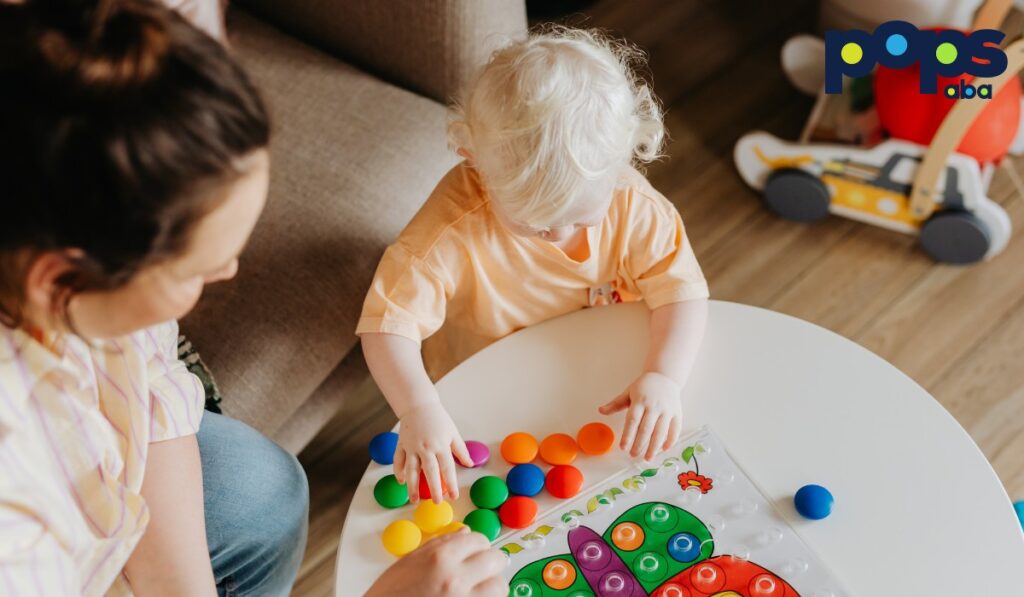
Our ABA centers in Newark, Princeton, and Jersey City (NJ) and Charlotte, Raleigh, and Durham (NC) provide structured one-on-one and group ABA therapy in a professional, distraction-free environment. Children develop communication, social, and daily living skills through peer interaction, ABA therapy, and evidence-based strategies guided by on-site BCBAs.
Find us near you in New Jersey.
Clear Guidance on Insurance Benefits and ABA Enrollment for Your Child
Our ABA centers in New Jersey and North Carolina accept all major insurers, including Medicaid, making clinic-based ABA therapy accessible. Whether it’s one-on-one ABA sessions or group social skills programs, we help families navigate coverage and get started quickly.






Our knowledgeable staff is on-call for all your questions. Just give us a ring!
Center-based ABA therapy is a structured, clinic or school-like program where children with autism receive individualized therapy from trained professionals. Sessions combine one-on-one instruction and group activities to build communication, social, and daily living skills in a controlled, distraction-free environment.
Therapy begins with an assessment by a BCBA (Board Certified Behavior Analyst), who creates a personalized plan with measurable goals. Children participate in structured lessons, peer activities, and data-driven interventions while receiving continuous supervision and support from therapists.
Each session includes one-on-one skill-building, group play, socialization exercises, and practice in real-life tasks. Techniques such as Discrete Trial Training (DTT) and Natural Environment Teaching (NET) are used to help children learn and generalize skills across settings.
Centers offer a structured environment, access to specialized resources, professional supervision, and peer interaction. This combination supports faster progress, consistent skill practice, and opportunities for social and emotional development.
Yes! Center-based ABA therapy provides natural opportunities for peer interaction, structured group activities, and evidence-based social skills training, helping children practice sharing, turn-taking, communication, and teamwork.
Both are effective, but center-based therapy provides a structured setting with peer interaction, classroom-style routines, and immediate BCBA oversight, which can accelerate skill acquisition and social development for some children.
Contact us to schedule a consultation or assessment. Our team will review your child’s needs, verify insurance coverage, and create a personalized plan to start therapy in a structured, supportive environment.
Find us in New Jersey
(973) 239-4797, 60 Pompton Avenue, Verona, New Jersey 07044, info@popsaba.com
Find us in North Carolina
(919) 899-1119, info@popsaba.com
From one-on-one sessions to group social skills programs, we provide structured, supportive care in our ABA centers in New Jersey and North Carolina. Get guidance on how to enroll in center-based ABA therapy and secure your child’s spot with our ABA enrollment support team.
