


Key Points:
- OT and ABA are stronger together: OT supports sensory and motor needs, while ABA builds communication, behavior, and daily living skills.
- Removing barriers improves learning: Better sensory regulation and motor skills can lead to greater success during ABA sessions.
- POPS ABA fits into a collaborative approach: Our team can coordinate care to support your child’s progress across every area of development.

Has your child ever had a meltdown right before a therapy session because their shirt tag felt unbearable? Or struggled to hold a crayon long enough to practice writing? You know your child is capable. But something keeps getting in the way.
That “something” is often sensory processing or motor development. And it’s exactly where occupational therapy and ABA therapy work best side by side.
What Each Therapy Does
ABA therapy teaches behavior. It builds communication, reduces harmful behaviors, and develops skills through structured, evidence-based strategies. It targets what a child does and how they respond to the world around them.
Occupational therapy, or OT, targets how a child physically experiences that world. An occupational therapist helps children develop the sensory tolerance, coordination, and daily living skills they need to function independently. Think dressing, eating, writing, and managing transitions without distress.
Both approaches focus on the child’s quality of life. But they get there through different doors. When providers coordinate ABA OT combined therapy, those two doors open into the same room.
Why Occupational Therapy Benefits Autistic Children in ABA Programs
Many children in ABA programs struggle with sensory sensitivities. Loud environments, certain textures, or physical transitions can spike anxiety and interfere with learning. A child who is overwhelmed cannot absorb new skills, no matter how well-designed the ABA session is.
This is where the occupational therapy autism benefits become clear. OT addresses the physiological and sensory barriers that block learning. Once those barriers are lowered, ABA strategies take hold more effectively.
Children who receive occupational therapy for autistic children alongside ABA often show:
- Better attention and focus during therapy sessions
- Greater tolerance for transitions and new environments
- Improved ability to follow multi-step instructions
- Stronger participation in social skills groups
- Reduced frustration during learning activities
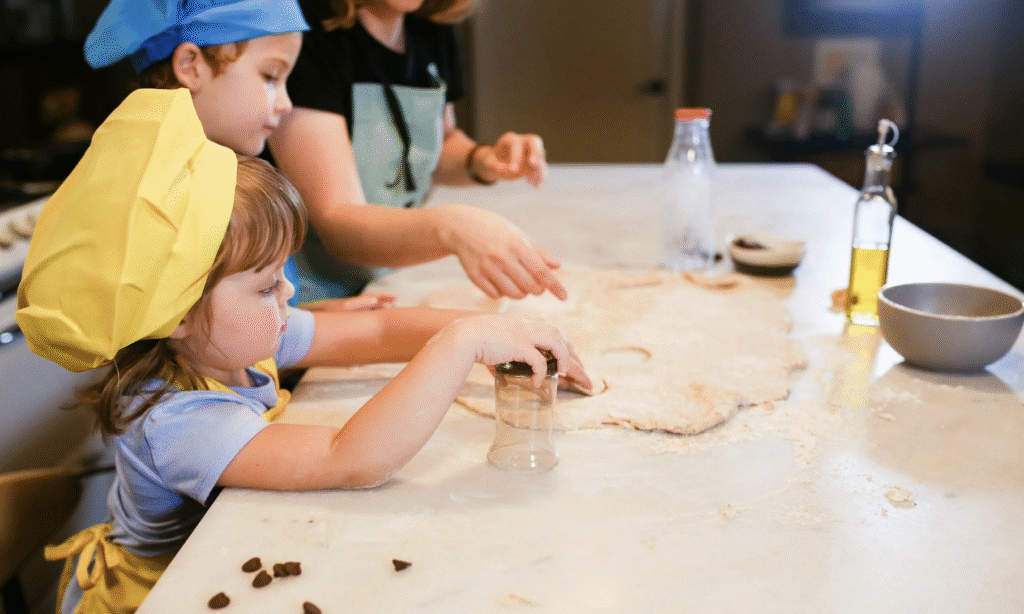
Sensory Integration and ABA: A Natural Partnership
Sensory integration is the brain’s process of organizing information from the body and environment. Many autistic children experience this differently. They may seek out intense sensory input or avoid it entirely.
Sensory integration ABA approaches borrow from both disciplines. An OT might design a sensory diet, a personalized plan of sensory activities to help regulate the nervous system throughout the day. The ABA team then builds session timing and reinforcement strategies around that regulated state.
For example, a child who needs heavy input before sitting still might do wall push-ups or carry a weighted backpack before center-based therapy begins. That simple sensory warm-up, recommended by the OT, helps the ABA session start with a calm, focused child rather than a dysregulated one.
Fine Motor Skills, Autism, and OT’s Role
Fine motor skills autism development is another area where OT and ABA work hand in hand. Many children in ABA programs work toward goals that require fine motor control: using a pencil, fastening buttons, using utensils, or completing a puzzle independently.
An ABA therapist can prompt and reinforce the behavior. But if the child lacks the underlying grip strength, hand-eye coordination, or wrist stability, the behavioral strategy alone will plateau. Fine motor skills autism OT support closes that gap. OT builds the physical capacity. ABA builds the behavioral routine around it.
Together, they create functional, lasting progress.

ABA Strategies That Pair Well with OT Goals
Here are three ABA therapy strategies that connect directly to OT goals, along with how they look in practice:
Task Analysis
This involves breaking a complex skill into small, sequential steps. Combined with OT support, it works well for self-care routines.
Example: Teaching a child to put on shoes becomes a 12-step sequence. The OT builds the finger strength needed for laces. The ABA therapist reinforces each step until the child completes the full chain independently.
Prompting and Fading
The therapist provides physical, verbal, or visual prompts and gradually reduces them as the child gains independence.
Example: An OT identifies that a child struggles with grip. The ABA therapist uses hand-over-hand prompting during writing tasks, then systematically fades support as motor control improves.
Natural Environment Teaching (NET)
Skills are taught in the settings where they naturally occur, rather than only at a table.
Example: For a child working on sensory tolerance, the ABA therapist incorporates OT-recommended sensory tools during play at our facility, reinforcing calm engagement in a naturalistic setting.

How Collaborative Care Works at POPS
POPS Therapy provides ABA OT collaborative care through a team-based approach. Our clinicians coordinate goals, share progress notes, and align strategies so your child receives consistent support across every session.
Whether your child receives in-home ABA therapy or center-based ABA therapy, our team factors in the full picture, including sensory needs, motor development, and behavioral goals.
We serve families in New Jersey and North Carolina, and we offer services across the continuum, from Early Intensive Behavioral Intervention (EIBI) for young children to social skills groups for older kids building peer relationships.
Ready to Start ABA With Our Team?
If your child is in ABA therapy and you want to understand how occupational therapy could strengthen their progress, we are here to talk. Our team at POPS works with families across New Jersey and North Carolina to build programs that address the full child, not just one area of development.
Contact us in New Jersey: (973) 239-4797 or North Carolina: (919) 899-1119, or fill out our intake form, or share your details on our website’s contact page, and we’ll call you.

Frequently Asked Questions
1. Can ABA and OT happen at the same time?
Yes. Many children receive both therapies concurrently. The key is coordination between providers. When ABA and OT teams communicate and align goals, the child benefits from both without conflicting strategies.
2. How do I know if my child needs OT alongside ABA?
Signs your child may benefit from OT include difficulty tolerating certain textures or sounds, trouble with handwriting or self-care tasks, frequent emotional dysregulation, and poor coordination during play. Talk to your BCBA or pediatrician about a formal OT evaluation.
3. Does insurance cover both ABA and OT?
Most insurance plans that cover ABA therapy also cover occupational therapy for autism. Coverage varies by plan and diagnosis. Our team can help guide you through the process when you fill out our intake form.
4. Will OT goals be incorporated into my child’s ABA program?
At POPS, yes. Our team reviews OT recommendations and incorporates relevant goals and strategies into your child’s ABA program where appropriate. Collaborative care is built into how we work.
5. Is sensory integration part of ABA therapy?
Sensory integration is primarily an OT domain. However, ABA therapists can account for sensory needs in session structure, environment setup, and reinforcement planning. The two disciplines support each other when providers collaborate.
