


Key Points:
- Proactive Preparation Reduces Anxiety: Using ABA strategies like visual aids, social stories, and role-play helps children with autism understand and feel more comfortable during doctor visits.
- Sensory Supports and Comfort Items Matter: Noise-canceling headphones, fidget toys, weighted blankets, and familiar items help manage overstimulation in medical environments.
- Positive Reinforcement Builds Cooperation: Immediate rewards and praise create positive associations with medical appointments, encouraging cooperation for future visits.

Why Children With Autism Feel Anxious About Medical Appointments
Medical appointments can be challenging for children with autism. However, with proactive preparation and evidence-based strategies from Applied Behavior Analysis (ABA), parents can help their child navigate medical appointments with confidence.
Children with autism may experience high levels of stress during medical appointments due to several factors:
- Sensory Overload: Bright lights, loud sounds, unfamiliar smells, or tactile experiences like blood pressure cuffs can be overwhelming.
- Disruption of Routine: Deviating from their daily schedule may trigger anxiety or meltdowns.
- Unpredictability & Waiting: Long waits in unfamiliar environments can be especially stressful for children who struggle with time concepts.
- Communication Challenges: Rapid questions or abstract medical language can be confusing and increase stress.
Recognizing these triggers is the first step in reducing medical anxiety and creating a positive doctor visit experience.
Medical Procedures and Environments That Stress Children with Autism
Research shows that the medical procedures that often cause the most anxiety for children are injections, blood draws, vital sign checks, and height and weight measurements. Stress can be heightened by:
- long waits,
- crowded spaces,
- loud noises,
- and overstimulating environments.
Nonverbal children may experience even higher levels of agitation, irritability, or outbursts compared with their verbal peers.
Bringing comfort and sensory items like noise-canceling headphones or favorite toys helps manage overstimulation, while positive reinforcement immediately after cooperative behavior builds confidence for future appointments.
ABA strategies can help make doctor visits less stressful: Using visual schedules, social stories, and role-playing can prepare children for what to expect.

ABA Strategies to Reduce Medical Anxiety
Applied Behavior Analysis (ABA) provides structured, evidence-based strategies that can help children with autism prepare for medical appointments. Key strategies include:
1. Visual Supports and Social Stories
Visual aids and social stories help children understand what to expect during doctor visits. Use pictures or step-by-step storyboards to illustrate each stage of the appointment, from arriving at the clinic to the exam itself. This predictability can significantly reduce anxiety.
Example: A social story titled “Going to the Doctor” with images of check-in, waiting, the exam, and receiving praise afterward.
2. Role-Playing and Desensitization
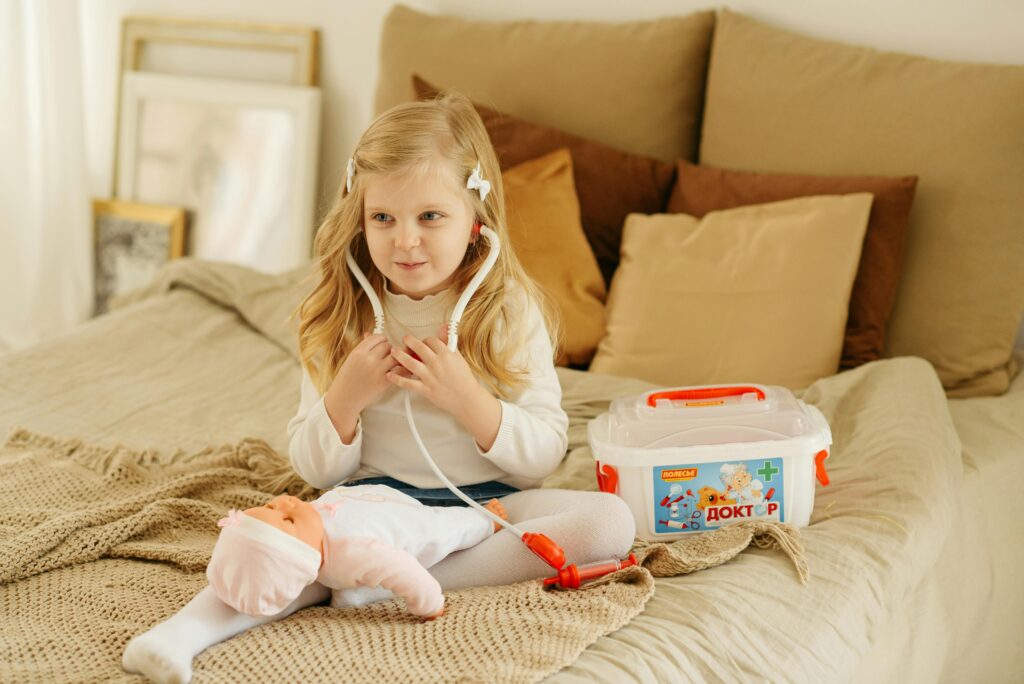
Practice medical procedures at home using a toy doctor kit. Role-play activities like listening to a teddy bear’s heartbeat, taking a blood pressure reading, or looking in ears familiarize your child with medical tools and procedures. Gradual exposure reduces fear during the actual visit.
Tip: A “dry run” visit to the clinic without an exam can help children become comfortable with the environment and staff.
3. Positive Reinforcement
Immediate rewards after cooperative behavior create positive associations with doctor visits. This can include a favorite snack, toy, sticker, or activity. ABA often uses token systems or “first/then” boards to clearly link behavior with reward.
Example: “First check-up, then tablet time.”
4. Sensory and Comfort Tools
Bring items that help manage sensory overload:
- Noise-canceling headphones to block waiting room sounds
- Weighted blankets or lap pads for calming input
- Favorite toys, plushies, or fidget tools
Even small environmental adjustments, like dimming lights or waiting in the car, can make a huge difference.
5. Clear Communication and Empowerment
Use simple, concrete language to explain procedures. Allowing your child to make small choices, such as which arm for a blood pressure cuff or whether to sit on a parent’s lap, provides a sense of control and reduces anxiety.

Scheduling and Preparation Tips
- Book Wisely: Schedule appointments during times when your child is typically calm, such as early morning or after lunch.
- Advance Information: Inform the staff about your child’s sensory triggers and communication style.
- Complete Paperwork Ahead: Filling out forms in advance reduces waiting and stress.
- Practice and Preview: Visiting the clinic before the appointment helps familiarize your child with the environment.
Example Scenario: A Successful Doctor Visit
Alex, Age 8
- Preparation (before the doctor’s visit): Parents read a social story about the visit and role-play at home with a stethoscope on a stuffed animal.
- Arrival: Appointment scheduled early to avoid crowds.
- During the Visit: Alex wears noise-canceling headphones, holds a favorite toy, and chooses which arm for the blood pressure reading.
- Reinforcement: After the doctor’s visit, Alex receives a sticker and extra tablet time.
This approach turns a potentially stressful experience into a structured, predictable, and even positive event.
✅ Doctor Visits Preparation Checklist for Parents
- Use Visual Aids & Social Stories: Create picture schedules or social stories to make doctor visits predictable.
- Practice with Role-Play & Desensitization: Use toy medical kits at home to familiarize your child with medical tools and procedures.
- Bring Comfort & Sensory Items: Pack noise-canceling headphones, favorite toys, fidget items, or a weighted blanket to reduce overstimulation.
- Empower Your Child: Offer simple choices and use clear, concrete language to explain what will happen.
- Reinforce Positive Behavior: Provide immediate rewards (stickers, treats, or favorite activities) to build confidence for future visits.
By implementing ABA strategies, parents can significantly reduce medical anxiety, improve cooperation, and create successful experiences for children with autism.
Struggling with doctor visits or medical anxiety for your child with autism? At Pops ABA, our team specializes in practical ABA strategies to make appointments easier and less stressful. Visit us to learn more and get personalized support for your family today.
FAQs
1. How can I prepare my child with autism for a doctor visit?
You can prepare your child using ABA strategies such as social stories, visual schedules, role-playing with a toy medical kit, and practicing desensitization to medical tools. Bringing comfort items like a favorite toy or noise-canceling headphones also helps reduce anxiety.
2. What are the main causes of medical anxiety in children with autism?
Medical anxiety often stems from sensory sensitivities (bright lights, loud sounds, unfamiliar smells), disruption of routine, unpredictability, long waits, and communication challenges. Understanding these triggers can help you plan a less stressful visit.
3. How do social stories and visual aids help with doctor visits?
Social stories and visual aids provide a predictable sequence of steps, helping children understand what to expect. This reduces fear of the unknown, and visits feel more manageable.
4. What sensory tools can help reduce anxiety during medical appointments?
Comfort items like weighted blankets, noise-canceling headphones, sunglasses, fidget toys, or a favorite plushie can help your child manage overstimulation and feel calmer during the appointment.
5. How can I reinforce positive behavior during doctor visits?
Immediate positive reinforcement, such as a small treat, sticker, or favorite activity, after cooperative behavior builds a positive association with doctor visits and encourages cooperation in future appointments.
6. Are there ways to make waiting less stressful for children with autism?
Yes. Schedule appointments during less busy times, wait in the car if possible, bring visual schedules or favorite activities, and use distraction techniques like tablets or fidget toys to make waiting more manageable.
