

Key Points:
- AAC empowers communication: Augmentative and Alternative Communication (AAC) helps children with autism express needs, reduce frustration, and build independence.
- Multiple AAC options: Low-tech tools like PECS and high-tech speech-generating devices can be tailored to each child’s abilities and communication goals.
- Integrated ABA support: Therapists use AAC in daily routines with modeling, prompting, and functional communication training to promote language, social skills, and behavioral improvement.

What Is Augmentative and Alternative Communication (AAC)?
Augmentative and Alternative Communication (AAC) is a critical component in Applied Behavior Analysis (ABA) therapy for children with autism or other developmental delays.
AAC provides tools and strategies that allow individuals with limited or no speech to communicate effectively, reducing frustration and challenging behaviors.
By integrating communication devices for autism, from low-tech picture boards to high-tech speech-generating apps, ABA therapists help children express needs, make choices, and build social connections.
Who Needs Augmentative and Alternative Communication (AAC)?
A child may benefit from Augmentative and Alternative Communication (AAC) if they cannot communicate effectively using verbal speech. This includes children who are nonverbal, have inconsistent or unclear speech, or struggle to express their needs and thoughts. AAC is suitable for children with congenital conditions, such as autism, Down syndrome, or cerebral palsy, as well as those with apraxia or acquired brain injuries that limit speech production.
Key Indicators and Conditions
- Nonverbal or Minimal Speech: Children who do not speak or have very limited verbal communication.
- Low Intelligibility: Children whose speech is difficult for both familiar and unfamiliar listeners to understand.
- Developmental Disabilities: Including Autism Spectrum Disorder (ASD), Down syndrome, developmental language delays, and childhood apraxia of speech.
- Physical Limitations: Conditions affecting muscle tone or motor control, such as cerebral palsy, muscular dystrophy, or spinal muscular atrophy, that hinder verbal communication.
- Acquired Conditions: Brain injury, stroke, or post-surgical needs (e.g., tracheostomy) that impact speech production.
When to Consider AAC
AAC is not only for children who are completely nonverbal. It can also support children who have difficulty with:
- Sentence formation or complex language
- Grammar and functional communication
- Expressing long-term or nuanced ideas
AAC can be introduced at any age, even in infancy, as part of early intervention programs, to promote communication skills from the start.
Key Professionals Involved in Recommending AAC
Augmentative and Alternative Communication (AAC) is primarily recommended and implemented by speech-language pathologists (SLPs) or speech and language therapists (SLTs), who specialize in assessing communication needs and selecting appropriate tools.
Successful AAC use often involves a multidisciplinary team to ensure the system is customized, functional, and integrated across environments.
- Speech-Language Pathologists (SLPs): Lead the assessment process, choose suitable low- or high-tech AAC systems, and provide training to users, families, and caregivers.
- Medical Specialists: Pediatricians, neurologists, or rehabilitation physicians may initiate referrals, particularly for children with complex medical or developmental needs.
- Educational Staff: Special education teachers, classroom aides, and school therapists support AAC implementation in academic settings, ensuring consistency throughout the school day.
- Assistive Technology Professionals: Rehab engineers or technical specialists assist with custom or computer-based high-tech AAC devices, adapting them to the user’s physical, sensory, and cognitive abilities.
Core Features and Types of AAC Systems in ABA Therapy
AAC provides alternative communication methods that supplement or replace spoken language, reducing frustration, supporting social interaction, and fostering independence. These systems are classified as unaided or aided, ranging from low-tech communication devices autism to high-tech speech-generating devices.
1. Unaided AAC Systems
Unaided AAC relies entirely on the child’s body, with no external tools. Common forms include:
- Gestures and Body Language: Pointing, nodding, waving.
- Facial Expressions: Smiling, frowning, or showing emotions.
- Sign Language/Sign Systems: Examples include American Sign Language (ASL), British Sign Language (BSL), or simplified systems like Makaton.
- Vocalizations: Non-word sounds, such as laughing, crying, or grunting.
- Eye Gaze: Indicating choices or interest using eye movement.
Scenario Example: During snack time, a child points to their mouth and signs “eat”. The ABA therapist immediately responds, reinforcing the attempt and reducing frustration-driven behaviors like whining or grabbing.
2. Aided AAC Systems (Low-Tech)
Low-tech AAC uses physical tools to support communication:
- Communication Books/Boards: Paper-based boards with pictures, symbols, letters, or words.
- Picture Exchange Communication System (PECS): Exchanging cards to request items.
- Objects of Reference: Using tangible items (e.g., a spoon for eating).
- Writing/Drawing: Using pens or paper to communicate.
- E-tran Frames: Clear sheets for eye-pointing to select letters or symbols.
Scenario Example: A child wants a juice box. They remove the “juice” PECS card and hand it to the caregiver, who immediately provides the juice. This reduces frustration and teaches functional communication.
3. Aided AAC Systems (Mid-Tech & High-Tech)
High-tech AAC uses technology to provide, store, and deliver messages:
- Mid-Tech Devices: Battery-operated, voice-output devices with limited vocabulary (e.g., GoTalk, BigMack).
- High-Tech Dedicated Devices: Speech-generating devices (SGDs) for communication.
- Tablets/Computers: Apps like Proloquo2Go, LAMP Words for Life, or TouchChat.
- Eye-Tracking Technology: Controls devices using eye movement for children with limited motor skills.
- Text-to-Speech Software: Allows typed messages to be spoken aloud.
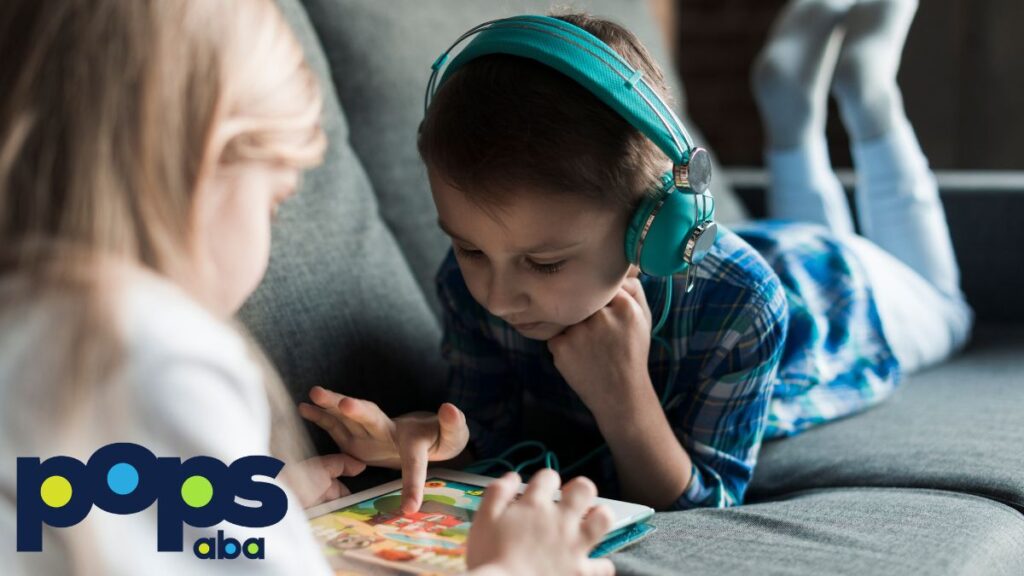
Scenario Example: An 8-year-old autistic student taps “I” + “want” + “cracker” on a tablet app. The device says “I want cracker,” allowing the student to communicate independently with teachers and peers, improving social engagement.

Key Concepts in AAC
- Access Methods: Techniques to select symbols or messages, such as direct selection (touch, eye gaze) or scanning with switches.
- Multi-Modal Communication: Many users combine methods, e.g., gestures plus a tablet or PECS.
- Vocabulary Selection:
- Core Vocabulary: Functional, frequently used words like “want,” “go,” “more,” “stop”.
- Fringe Vocabulary: Specific nouns or topics, like “train,” “toy car,” or family names.
Scenario Example: During play, a child presses “more” on their device after finishing a toy. The therapist models “want more car,” gradually expanding the utterance to include both core and fringe vocabulary.
Symbol Representation
Symbols are essential to AAC for autism, helping children connect visuals with words:
- Pictures/Icons: Clear, concrete representations of objects or actions.
- Text Labels: Useful for children learning to read.
- Iconicity: High-iconicity symbols resemble the object closely; low-iconicity symbols are more abstract.
Scenario Example: A child initially hands a PECS card for “cookie.” Later, they press the corresponding icon on a high-tech device, which speaks “cookie,” bridging visual recognition and spoken language.
Device Functionality
Modern AAC devices have advanced features that promote independence:
- Voice Output: Speaks selected words aloud for auditory feedback.
- Customizable Layouts: Symbols can be organized to fit motor and cognitive abilities.
- Dynamic Screens: Switch between categories (e.g., food, play, social phrases) for expanded communication.
- Organized Language Systems: Core vocabulary is always accessible to encourage frequent use and generalization.
Scenario Example: A child using a premier, research-based AAC app for functional communication might use the app to switch from: “play” to “food”, independently requesting “want juice” and “more bubbles,” promoting autonomy.
Access Methods
AAC systems are tailored to the user’s physical abilities:
- Direct Selection: Touching a symbol or button.
- Eye Gaze: Using eye movements to select items.
- Switch Access: External switches activate pre-recorded messages or device outputs.
Scenario Example: A child with fine motor difficulties uses an adaptive switch to request a “break” during a challenging classroom activity. The ABA therapist reinforces the request, preventing behavioral outbursts.
By selecting the right type of AAC system, vocabulary, symbols, and access methods, caregivers and ABA therapists can reduce frustration, encourage functional communication, and support language development. AAC autism interventions are a cornerstone of ABA therapy, helping children communicate effectively, build independence, and engage socially.

ABA-Specific Implementation Strategies
ABA therapy ensures AAC is more than a tool, it’s an integrated part of learning functional communication.
1. Modeling (Aided Language Stimulation)
Therapists and caregivers use the AAC system themselves, showing the child how to communicate naturally.
Example: During snack time, the therapist taps “want cookie” on the device while saying it aloud, demonstrating the connection between symbol, spoken language, and action.
2. Structuring Communication Opportunities
Environment is arranged to encourage requests, comments, and social interaction.
Example: During play, a preferred toy is placed slightly out of reach, prompting the child to use their AAC device to ask for it.
3. Promoting Independence and Functionality
The goal is for children to use AAC across all environments—not just therapy sessions—to reduce frustration and build autonomy.
Example: Parents are trained to consistently use the AAC device at home, during outings, and in school, ensuring communication generalizes across settings.
4. Individualization
ABA programs consider each child’s motor, sensory, and cognitive abilities, tailoring AAC systems accordingly.
Example: A child with visual processing challenges may have high-contrast symbols and fewer items per screen, supporting easier comprehension and faster communication.
Common Low-Tech Tools
- PECS (Picture Exchange Communication System): Children hand pictures to communicate requests and gradually build sentence structure.
- Choice boards: Display options visually, allowing children to make decisions independently.
- Visual schedules: Help children understand sequences and transitions, reducing anxiety.
Benefits of AAC in ABA Therapy
- Reduces frustration and challenging behaviors.
- Improves expressive language skills and often encourages speech development.
- Increases independence and self-advocacy.
- Enhances social interaction and engagement with peers.
- Supports cognitive growth and early literacy skills.
By combining alternative communication tools with ABA strategies, children with autism can express themselves effectively, engage meaningfully with their environment, and achieve greater autonomy.
Augmentative and Alternative Communication (AAC) in Autism: In Practice
Augmentative and Alternative Communication (AAC) provides methods to supplement or replace spoken language for individuals with autism who have challenges with verbal communication. AAC can be unaided, using gestures, signs, or body language, or aided, using low-tech tools like picture cards or high-tech speech-generating devices. Below are practical scenarios demonstrating how AAC supports communication for autistic children and adults.
Scenario 1: Low-Tech AAC – Picture Exchange Communication System (PECS)
Context: A 5-year-old autistic child who is non-speaking becomes frustrated because they want a juice box but cannot verbally request it.
The Scenario: The caregiver introduces a PECS board, a low-tech binder containing laminated pictures. The child is taught to remove the picture of “juice” and hand it to the caregiver.
The Result: The child receives the juice promptly, reducing frustration and anxiety. The picture provides a consistent way to communicate needs and lays the foundation for more advanced communication, preventing behavioral outbursts.
Scenario 2: High-Tech AAC – Speech-Generating Tablet
Context: An 8-year-old autistic student who uses gestalt language processing (repeating familiar scripts) struggles to form new, spontaneous sentences in school.
The Scenario: The student uses a tablet with an app like Proloquo2Go or LAMP Words for Life. The device features dynamic folders (e.g., “Food” → “Snack”). The student taps “I” + “want” + “cracker.”
The Result: The tablet vocalizes, “I want cracker,” providing immediate auditory feedback and allowing the student to communicate independently with teachers. This enhances social engagement and classroom participation.

Scenario 3: Functional Communication Training (FCT)
Context: A teenager with autism often screams to request a video game, leading to behavioral challenges during high-stress moments.
The Scenario: Instead of focusing on stopping the screaming, the team implements FCT using a high-tech speech device. The teen is prompted to press a button that says, “My turn, game,” as a replacement behavior.
The Result: The teenager learns that using the device results in a faster, positive outcome—the game, reducing the need for screaming and other negative behaviors.
Scenario 4: Visual Support for Communication
Context: An autistic child struggles to understand daily routines, causing anxiety and communication shutdowns.
The Scenario: Parents and teachers introduce a “first-then” visual schedule, a low-tech AAC tool showing the current task and the next reward (e.g., “First: Math → Then: Playtime”).
The Result: The child uses the visual schedule to understand expectations, reduces anxiety, and communicates readiness to transition, decreasing tantrums and promoting smoother daily routines.
In These Scenarios, Using AAC Tools:
- Reduced Anxiety and Frustration: Provides functional ways to communicate, preventing behavioral challenges.
- Increased Independence: Empowers individuals to express needs, thoughts, and feelings on their own.
- Supports Social Interaction: Enhances engagement with peers, family members, and caregivers.
- Does Not Hinder Speech: AAC encourages language development and can complement verbal communication.
Whether through low-tech PECS boards, high-tech speech-generating devices, or visual supports, AAC in autism gives children and adults the ability to communicate effectively, reducing frustration, promoting independence, and fostering social and academic engagement.
Proper implementation by trained professionals ensures AAC becomes a bridge to lifelong communication skills rather than a replacement for speech.
Families can find expert AAC guidance and therapy support at Pops ABA, where trained professionals tailor interventions to each child’s communication needs. Contact us today.
FAQs
1. What is AAC and how does it help children with autism?
AAC (Augmentative and Alternative Communication) includes tools and strategies, like PECS, gestures, or speech-generating devices, that help children with autism communicate when verbal speech is limited. It reduces frustration, promotes independence, and supports social and language development.
2. Who can benefit from AAC?
Children or adults who are nonverbal, have unclear speech, or struggle with functional communication, such as those with autism, cerebral palsy, apraxia, or brain injuries, can benefit from AAC systems tailored to their abilities.
3. What types of AAC are available?
AAC can be:
- Unaided: Gestures, sign language, facial expressions
- Low-Tech: Picture cards, PECS boards, communication books
- High-Tech: Speech-generating devices and tablet apps like Proloquo2Go or LAMP Words for Life
4. Can AAC devices prevent speech development?
No. Research shows that using AAC supports language growth and often encourages verbal speech development. AAC is a bridge to communication, not a replacement for learning to speak.
5. How do therapists teach children to use AAC in ABA therapy?
ABA therapists integrate AAC into daily routines using strategies like modeling (aided language stimulation), prompting, and functional communication training (FCT). This helps children communicate needs, make choices, and reduce challenging behaviors.
6. Where can I get AAC support for my child?
Families can access expert AAC guidance, therapy, and customized communication plans at centers like POPS ABA, where trained professionals evaluate, recommend, and implement communication devices for autism.
