

Key Points:
- Autism treatment involves a combination of behavioral, developmental, and supportive therapies tailored to each child’s unique strengths and challenges.
- Evidence-based approaches like ABA therapy, speech therapy, and occupational therapy promote communication, independence, and learning.
- Early intervention and collaboration between therapists, parents, and educators create the most effective support systems for children with autism.
When your child receives an autism diagnosis, it can feel overwhelming at first. There’s a flood of new information, questions about what comes next, and the pressing desire to find what will truly help your child thrive. Fortunately, there are several evidence-based treatment options that have been shown to make meaningful differences in development, communication, and daily living skills.
This guide explores five of the most effective autism treatment options for children—how they work, what they target, and how to know which may best support your child’s learning and growth. Each therapy is designed to build on a child’s unique strengths while addressing areas that need extra support.
Applied Behavior Analysis (ABA) Therapy
Applied Behavior Analysis (ABA) therapy is one of the most widely recognized and research-backed treatments for children with autism. It focuses on understanding how behaviors work, what triggers them, and how to encourage positive behaviors while reducing challenging ones.
How ABA Therapy Works
ABA therapy uses structured techniques to teach skills in small, manageable steps. Therapists break complex tasks into simpler parts and reinforce desired behaviors through positive feedback. For instance, when a child asks for help or follows a direction appropriately, they receive praise or a reward—helping them learn that communication and cooperation lead to good outcomes.
ABA can target a wide range of goals, including:
- Communication and language skills
- Social interaction and play skills
- Daily living skills like dressing or brushing teeth
- Coping and emotional regulation
- Reduction of self-injurious or disruptive behaviors
Why ABA Therapy is Effective
Consistency and data-driven progress tracking make ABA particularly effective. Sessions are customized for each child, with therapists continually assessing and adjusting strategies to ensure steady improvement. Parents are also trained to reinforce skills at home, which helps children generalize what they learn into real-life situations.
Programs use a compassionate, child-centered approach—combining evidence-based strategies with genuine connection to make learning meaningful and lasting.
Speech and Language Therapy
Many children with autism experience challenges in communication—ranging from limited verbal ability to difficulties in understanding nonverbal cues or conversational flow. Speech and language therapy plays a vital role in helping them express themselves and connect with others.
Core Goals of Speech Therapy
A speech-language pathologist (SLP) assesses each child’s communication profile and tailors therapy around it. Depending on the child’s needs, sessions might focus on:
- Developing expressive language (using words or phrases)
- Improving receptive language (understanding what others say)
- Building social communication and turn-taking skills
- Using augmentative and alternative communication (AAC) tools such as picture cards or speech-generating devices
How It Supports Overall Growth
Beyond helping a child “talk,” speech therapy opens the door to independence, emotional expression, and social participation. Therapists often integrate play and visual support to make sessions engaging and aligned with how children on the spectrum learn best.
When paired with ABA therapy, speech therapy becomes even more powerful—because children learn both how to communicate and why communication matters in daily life.
Occupational Therapy (OT)
Occupational therapy focuses on helping children with autism build the skills they need for everyday activities. While the word “occupation” might sound job-related, in this context it means any activity that gives a child purpose and structure—like playing, learning, eating, or dressing.
The Role of OT in Autism Treatment
Many children with autism struggle with fine motor coordination, sensory sensitivities, or difficulty transitioning between tasks. Occupational therapists address these through structured, hands-on activities that help improve:
- Sensory processing: Teaching children to manage sensitivities to sounds, textures, or movement.
- Fine motor skills: Developing control for writing, buttoning, or feeding.
- Self-care routines: Building independence in hygiene, dressing, or meal preparation.
- Attention and regulation: Helping children stay calm and focused through sensory-based strategies like deep pressure, movement breaks, or visual schedules.
How OT Integrates with Other Therapies
Occupational therapy complements ABA and speech therapy by addressing the sensory and physical foundations of learning. For instance, if a child has trouble sitting still during an ABA session, an OT can create sensory strategies to help them feel grounded and ready to learn.
Developmental and Play-Based Therapies
Before diving into structured teaching, children with autism benefit greatly from play-based and developmental approaches. These therapies focus on building relationships, emotional connection, and social understanding through play—meeting children where they are rather than forcing rigid goals.
Common developmental models:
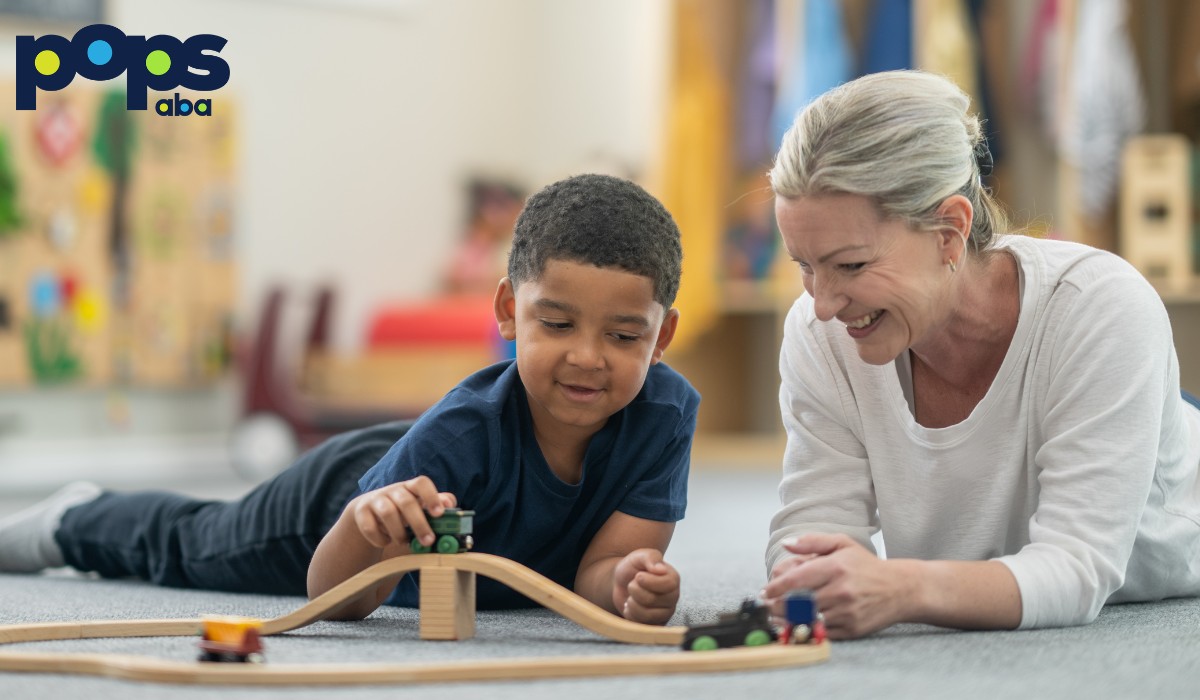
- DIR/Floortime – Therapists and parents join children in their play to promote emotional engagement, shared attention, and problem-solving. It’s less about directing the child and more about expanding their world through connection.
- Early Start Denver Model (ESDM) – Combines play-based learning with behavioral techniques to target communication, social skills, and cognitive growth in younger children.
- Relationship Development Intervention (RDI) – Focuses on helping children form social relationships by improving flexibility, emotional regulation, and perspective-taking.
Why Play-Based Therapies Matter
For many children, play is the natural way to learn. These models strengthen the social and emotional foundations that other therapies build upon. They also encourage parental involvement—helping families understand how to make daily interactions more therapeutic and connected.
Social Skills Training and Group Therapy
As children grow, understanding social rules and navigating group interactions become key developmental goals. Social skills programs, often conducted in small groups, provide structured environments where children can learn and practice these abilities safely.
What Social Skills Programs Teach
Social skills training helps children learn how to:
- Initiate and maintain conversations
- Understand facial expressions and body language
- Take turns and share during play
- Manage frustration or conflict in social situations
- Build empathy and recognize others’ perspectives
Sessions may include role-playing, video modeling, or peer-mediated activities to make learning hands-on and engaging.
Building Confidence Through Practice
Practicing social skills with peers helps children generalize what they’ve learned into school and community settings. It also gives them a sense of belonging and boosts self-esteem—a vital component of emotional development.
When combined with ABA therapy, social skills programs can be individualized and reinforced through daily routines, ensuring that gains made in sessions carry over to real-world situations.
How to Choose the Right Treatment Plan
Every child with autism is unique, which means there’s no universal treatment plan that fits all. The best approach often involves combining therapies based on your child’s age, strengths, and goals.
Here’s a step-by-step guide parents can follow when exploring treatment options:
- Start with a Comprehensive Evaluation: A developmental pediatrician, psychologist, or BCBA (Board Certified Behavior Analyst) can help identify your child’s strengths, challenges, and priorities for therapy.
- Prioritize Individualized Goals: Ask providers how they tailor therapy to your child. Avoid one-size-fits-all approaches—progress should always align with your child’s pace and needs.
- Coordinate Across Disciplines: Encourage collaboration between ABA, speech, and occupational therapists. When therapies align, children make faster, more consistent progress.
- Monitor Progress Regularly: Request measurable goals and regular progress reports. Adjust strategies as your child’s needs evolve.
- Stay Involved: Parent participation is one of the strongest predictors of success. Ask therapists for strategies you can use at home to reinforce new skills.
By combining professional support with your everyday interactions, your child gains consistency—and consistency is the key to real, lasting growth.
Empowering Your Child’s Future Through ABA Therapy
Each of these therapies plays an important role in helping children with autism learn, communicate, and connect. But when it comes to measurable, individualized progress, ABA therapy remains one of the most comprehensive and proven options available.
ABA therapy helps children develop independence by focusing on everyday goals—whether that’s learning to ask for help, playing cooperatively, or managing transitions calmly. By using positive reinforcement and data-driven planning, children learn step-by-step, building confidence along the way.
At Pops ABA, families find compassionate, evidence-based support that meets children where they are—and helps them move forward at their own pace. Our dedicated team designs programs tailored to each child’s learning style and interests, ensuring that every milestone feels meaningful and attainable.
If you’re looking for trusted ABA therapy in North Carolina or New Jersey, reach out to learn more about how personalized behavioral therapy can make a lasting difference for your child. Let’s take the next step together toward growth, confidence, and connection.
