


Quick Summary:
- Sleep struggles are common for autistic children, and there are ways to help.
- Pops ABA builds sleep and daily routines into therapy plans.
- Small, consistent changes at bedtime can lead to better nights for the whole family.

If bedtime feels like a nightly battle in your house, you are far from alone. Autism sleep problems show up in a lot of the families we work with, and they can wear everyone down fast. A tired child struggles more during the day, and a tired parent has less patience to work with.
At Pops ABA, we look at sleep the same way we look at any other daily skill. It can be taught, practiced, and improved with the right approach.
Why Sleep Can Be Challenging For Many Autistic Children
Autism and sleep disorders often go hand in hand, and there are a few reasons behind this. Some children have trouble winding down because their bodies process sensory input differently. Others struggle with transitions, and bedtime is one of the biggest transitions of the day.
A few common reasons sleep becomes difficult include:
- Sensory sensitivity to light, sound, or the feeling of certain pajamas or blankets
- Difficulty shifting from an active or preferred activity to a calm bedtime routine
- Anxiety around darkness, being alone, or an unfamiliar sensation of falling asleep
- Irregular melatonin production, which affects some autistic children more than others
- A bedtime routine that changes from night to night, making it hard to predict what comes next
None of this means your child is being difficult on purpose. It means their body and brain process bedtime differently than a lot of other kids, and that calls for a different approach.
How Our Approach To ABA Helps With Sleep Routines
A sleep routine for autism works best when it is built the same way we build any other ABA goal. Small steps, consistent practice, and positive reinforcement along the way.
Here is what this can look like in practice. Say a child resists getting into pajamas every night. Instead of turning it into a struggle, our team might break the routine into small steps, reinforcing each one as the child completes it. Over time, that resistance tends to fade because the steps become familiar and predictable.
ABA also uses visual schedules often for this exact purpose. A simple picture chart showing each bedtime step- brush teeth, put on pajamas, read a book, lights off- gives your child a clear idea of what happens next. This reduces the uncertainty that often fuels bedtime resistance.
Bedtime Strategies Autism Families Can Try Tonight
Bedtime strategies autism experts recommend usually focus on consistency and predictability. Here are a few we walk families through often.
Before Bedtime
- Start winding down at the same time each night; even fifteen minutes earlier can help
- Dim the lights an hour before bed to signal the body it is time to slow down
- Avoid high-energy activities, screens, or big snacks close to bedtime
- Use a visual schedule so your child knows what step comes next
During Bedtime
- Keep the routine short and predictable; long routines can backfire and overstimulate
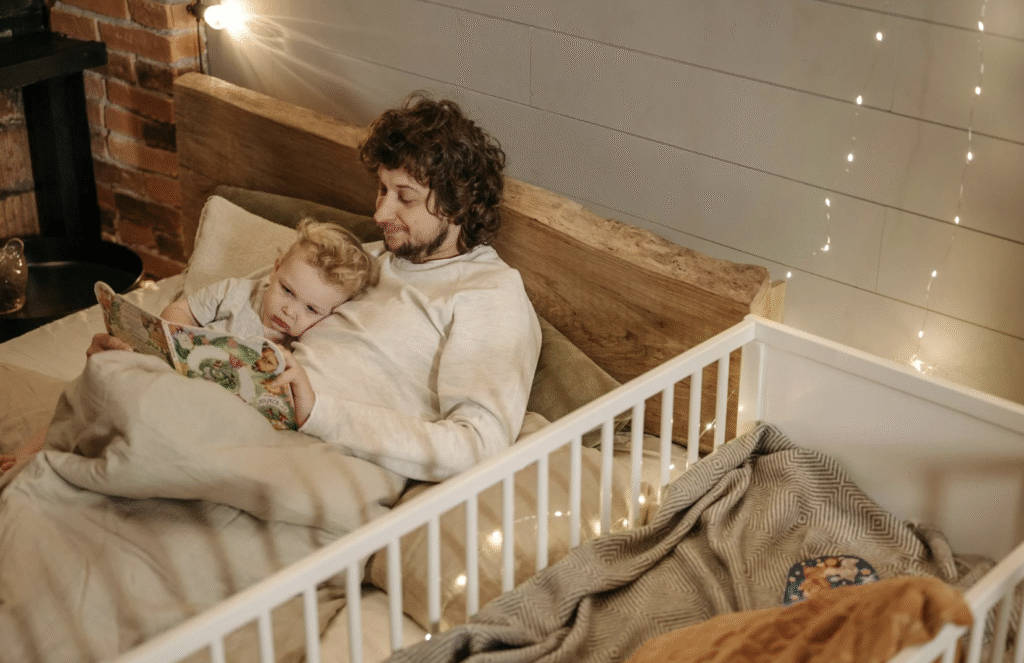
- Use calm, quiet activities like reading a short book or listening to soft music
- Offer a consistent comfort item, like a weighted blanket or favorite stuffed animal
- Avoid introducing new steps or surprises during the routine itself
After Bedtime
- Keep the room dark and quiet, minimizing check-ins unless truly needed
- If your child wakes during the night, keep interaction brief and calm
- Avoid turning on bright lights or engaging in conversation during nighttime wake-ups
- Stay consistent, even on hard nights. Consistency is what makes the routine work over time

How To Help Autistic Child Sleep Through The Night
Falling asleep is one challenge. Staying asleep is often another. If you are wondering how to help an autistic child sleep through the night without frequent wake-ups, a few strategies tend to help.
- Keep the sleep environment the same every night: same room, same bedding, same lighting
- Address sensory triggers directly, like scratchy pajama tags or a too-warm blanket
- Build in a consistent wind-down routine so the body associates certain steps with sleep
- Track patterns over a week or two to spot what might be waking your child up
Our team often works with families to track this data closely, since patterns are not always obvious without writing them down. What looks random at first sometimes points to a clear trigger once we look closely.
How Sleep Fits Into Bigger Daily Routines
Sleep does not exist on its own. It connects to a lot of other parts of your child’s day, and building independence in one area often supports progress in another.
At Pops ABA, we look at daily routines as a whole, not just isolated pieces. This might include:
- Morning routines that set the tone for a more regulated day
- Mealtime routines that reduce stress around eating
- Bedtime routines that support better sleep and, in turn, better days
- Self-care routines that build independence over time
Through in-home ABA therapy, our team can work directly in your home environment, observing your actual bedtime routine and adjusting it based on what we see. For younger children, this kind of routine building often starts within our early intensive behavioral intervention program, where daily living skills get built early and reinforced consistently.
Families interested in a more structured setting can also explore our center-based ABA therapy program, where routine building happens alongside other therapy goals.
Why Consistency Across The Family Matters
One thing we tell families often is that a sleep routine only works if everyone in the house follows it the same way. If one parent allows extra time before lights out and another does not, that inconsistency can undo a lot of progress.
Our team helps build routines that make sense for your whole family, not just your child, so everyone can stick with it long term. You can learn more about our approach on our about page, or explore our facility if you are considering a center-based setting.

Frequently Asked Questions
1. How long does it take to see progress with a new bedtime routine?
This varies by child. Some families notice small improvements within a couple of weeks, while others take longer. Consistency plays a big role in how fast progress shows up.
2. Can ABA therapy help with frequent nighttime waking, not just falling asleep?
Yes. Our team looks at the full sleep pattern, not just bedtime itself, and builds strategies around what is happening throughout the night.
3. Should I use a visual schedule even if my child cannot read yet?
Yes. Picture-based schedules work well for children who are not reading yet, since they rely on images rather than words.
3. Is it normal for sleep struggles to affect behavior during the day?
Very common. Poor sleep often shows up as increased frustration, meltdowns, or trouble focusing during the day.
4. Does Pops ABA work on sleep as part of a general therapy plan, or is it separate?
Sleep and daily routines get built directly into your child’s overall therapy plan, based on the goals your family shares with us.

Let’s Build A Better Bedtime Together
Sleep struggles do not have to be something your family just lives with. With the right routine and a bit of consistency, better nights are possible, for your child and for you.
Call us in New Jersey at (973) 239-4797 or in North Carolina at (919) 899-1119. You can also email info@popstherapy.com or fill out our contact form, and we will call you back.
Reach out today, and let’s start working toward calmer nights together.
